Unbalanced AC/DC Power Flow
Simulate unbalanced three-phase AC systems and mixed AC/DC microgrids with per-phase phasor modeling, neutral current analysis, and single-phase AC/DC converter support.
DCIDE now supports unbalanced AC and mixed AC/DC power flow simulations. Previously, all AC zones were modeled as balanced three-phase systems, meaning every phase carried the same voltage and current. This works well for symmetric designs but falls short when single-phase loads, phase-specific connections, or AC/DC converters introduce asymmetry. With this update, DCIDE models each phase independently, giving you accurate per-phase voltages, currents, and power flows across your entire microgrid.
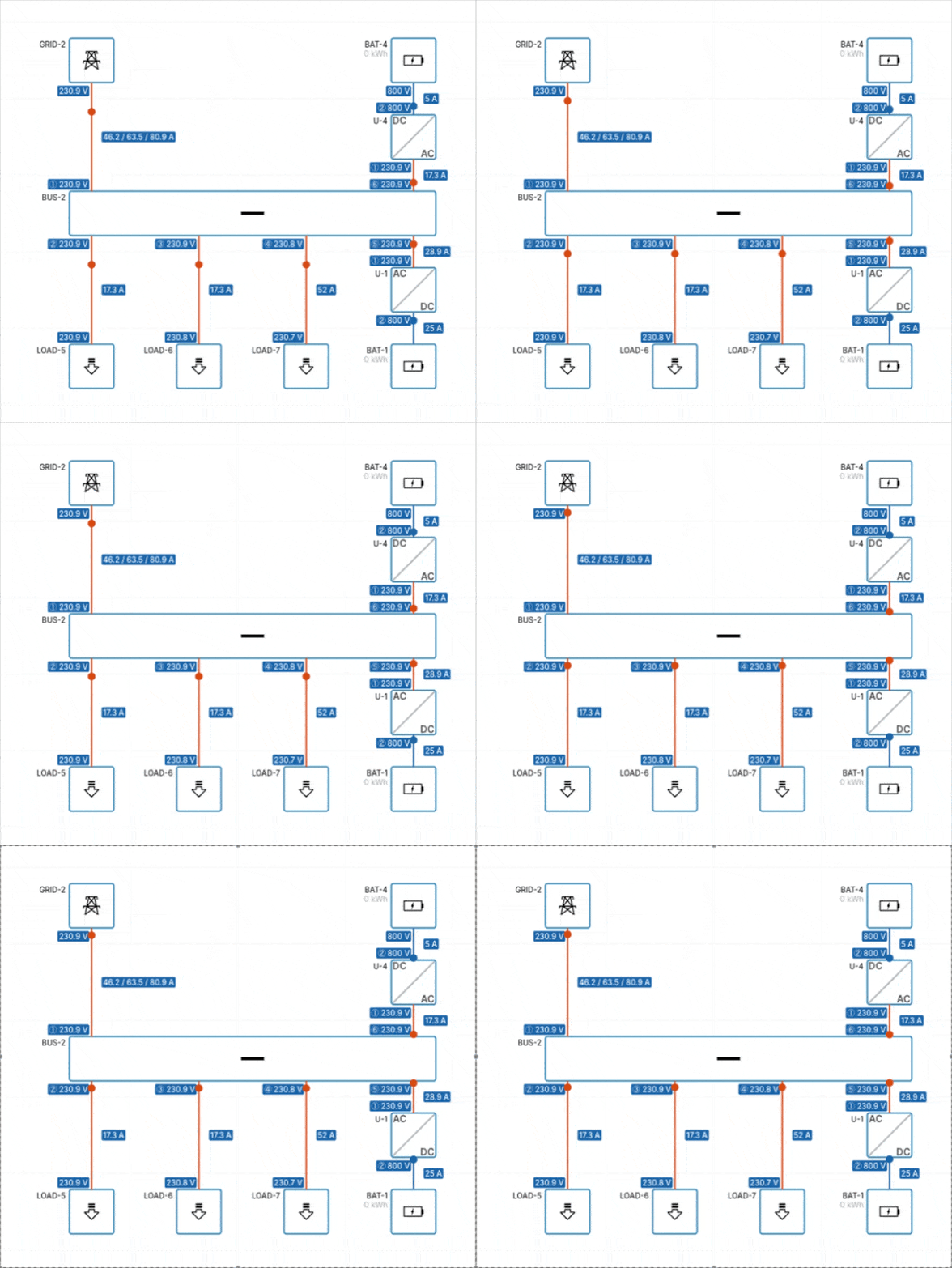
Per-Phase Phasor Modeling
Each AC phase (L1, L2, L3) and the neutral conductor are now modeled as independent complex phasors with their own voltage and current variables. This means a 4 kW single-phase load connected to L1 of a three-phase bus is no longer approximated as a balanced 12 kW load spread across all phases. You see the actual current on each phase and the resulting neutral return current from the imbalance.
Mixed AC/DC Systems
Hybrid microgrids that combine AC and DC subsystems through converters are increasingly common. DCIDE now fully supports single-phase and three-phase AC/DC converters within the same simulation. Whether you have a battery on a DC bus feeding into an AC distribution panel, or an AC grid connection supplying DC loads through a rectifier, the simulation engine handles the galvanic coupling and power balance across both domains.
What This Unlocks
- Residential and commercial microgrids with mixed single-phase and three-phase loads on the same bus.
- Hybrid AC/DC architectures where DC battery storage or solar PV connects to an AC distribution system through converters.
- Neutral current analysis to verify that return paths are properly sized for unbalanced loading conditions.
- Accurate per-phase voltage drops so you can identify phases that are under- or over-loaded before they become a problem.